 Iceland Volcano Tour
Askja Caldera Tours: Highland Day Trips Compared
An Askja caldera tour is the most remote volcano day sold in Iceland and one of the longest. Every listed departure runs from the Lake Myvatn area into the volcanic highlands, crosses rivers that no ordinary car can ford, and spends twelve hours on rough tracks before returning. This page compares the three days side by side, explains which vehicle and which season you need, and sets out what you must carry because nothing is sold on the route. It also covers the volcano itself, its 1875 eruption, the Holuhraun lava field you drive through, and how this highland day differs from the easier volcano trips in the south and west of the country.
Quick answer Askja caldera tours at a glance
Askja caldera tours cost from $310 to $480 per person, last 12 hours or a full day, and run only in summer because highland F-roads close with the first snow. All departures leave from the Lake Myvatn area and there are no shops or restaurants anywhere on the route, so you bring your own food. You cannot drive there in a normal car.
Key takeaways
- Compare all three Askja caldera tours by price, vehicle and season before you book.
- Read what the day honestly does and does not include in the comparison table.
- Packing wrong ruins this trip, so check what to wear on a volcano hike before you leave Myvatn.
- No eruption is flowing in Iceland right now, which we explain on our page about safety during an eruption.
Askja Caldera Tours Compared
Three day trips reach the Askja caldera and the Viti explosion crater, all from the Lake Myvatn area in the north. Two use super jeeps built for highland F-roads and river crossings, and one uses a 4x4 bus, which is cheaper but less flexible. None includes lunch, none includes hotel pickup, and none can promise anything about volcanic activity, because access to any eruption site is decided by the Department of Civil Protection and not by the operator. The prices below come from the listings on Viator and GetYourGuide and the durations and pickup points come from the same listings. Figures current in Q3 2026.
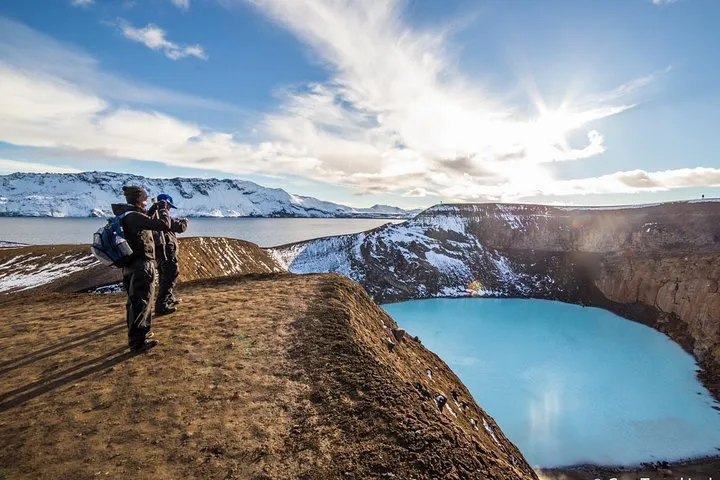 from $480
Highland caldera
from $480
Highland caldera Askja and Holuhraun Super Jeep Day Tour from Lake Myvatn
The longest and most remote day on this list, and the only one that reaches a caldera you cannot drive to in a normal car. Bring your own food: there is no shop or restaurant anywhere on the route.
- Askja caldera and the Viti explosion crater
- Holuhraun, Iceland's largest lava field since 1783
- National park fees included
- Ten people maximum per booking
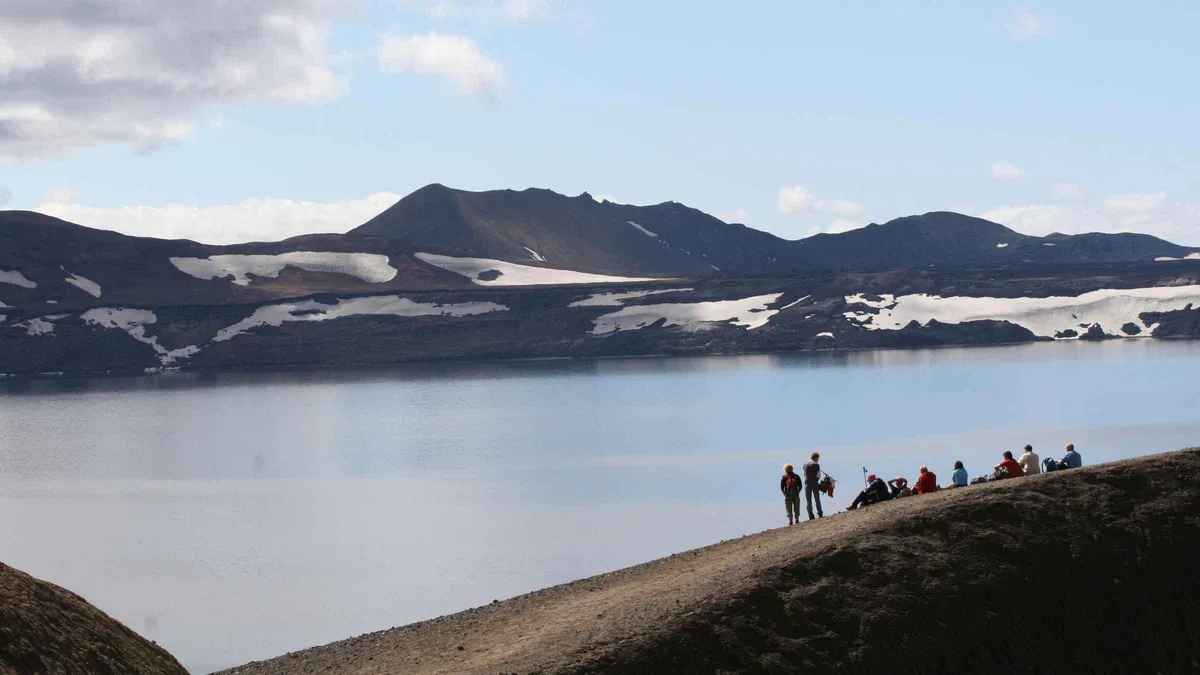 from $310
4x4 bus
from $310
4x4 bus Askja Caldera Classic
The bus version of the Askja day, cheaper than the super jeeps and with only three reviews so far. The river crossings are why an ordinary vehicle cannot follow.
- 4x4 bus into the volcanic highlands
- River crossings on the highland track
- Guide covering the geology on the way
- Full day from the Myvatn area
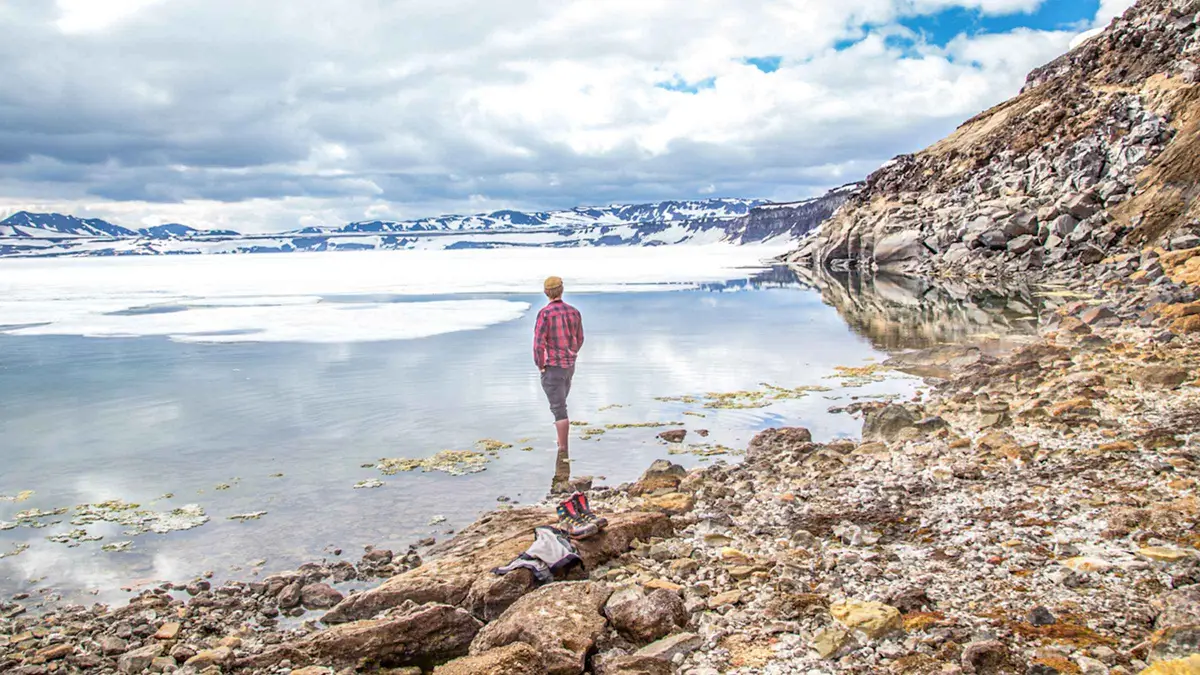 from $470
Viti crater hike
from $470
Viti crater hike From Myvatn Lake: Askja Volcano and Wilderness Super Jeep Tour
The super jeep version, with the flexibility to stop where the guide thinks it is worth stopping. The rating sits lower than the other highland days here, so read the recent reviews.
- Askja caldera and the walk to Viti crater
- Askja lake at the bottom of the caldera
- Flexible stops with a local guide
- Twelve hours from Lake Myvatn
Side By Side: Price, Vehicle And Duration
The table below puts the three Askja day trips next to each other so you can see where your money goes. Prices, durations, pickup points and group limits come from the operator listings on Viator and GetYourGuide. Ratings are the platform scores at the time the listing data was collected, and the review counts are small, so treat them as a weak signal rather than a verdict.
| Tour | What you get | Time | Book | Leaves from | Price |
|---|---|---|---|---|---|
| Askja and Holuhraun Super Jeep Day Tour from Lake Myvatn | Super jeep, Holuhraun lava field, park fees, max 10 per booking | 12 hours | Check Availability | Icelandair Hotel, Myvatn at 08:00 | $480 |
| Askja Caldera Classic | 4x4 bus, river crossings, geology guide, full day | 1 day | Check Availability | Myvatn area | $310 |
| Askja Volcano and Wilderness Super Jeep Tour | Super jeep, walk to Viti crater, Askja lake, flexible stops | 12 hours | Check Availability | Lake Myvatn area | $470 |
What The Askja Caldera Actually Is
Before you spend twelve hours driving to it, it helps to know what you are driving toward.
A Caldera In The Highlands
Askja is a volcano in the Icelandic highlands, and the word caldera describes the large collapse depression at its top rather than a single cone. Askja volcano sits in a landscape of black sand and old lava, far from any town, which is exactly why reaching it takes a full day. The feature most visitors come for is Viti, an explosion crater beside the Askja caldera. The walk down into Viti is steep, and the walk back out is steeper, so the day is rated for people with at least moderate fitness rather than casual sightseers.
Inside the caldera system there is also the Askja lake at the bottom, which the super jeep itinerary on this page includes. The land around Askja was reshaped by the 1875 eruption, one of the most violent in Iceland's recorded history, and the fine ash from that event forced emigration from parts of east Iceland. You will hear that story from the guide on the drive, because the terrain on the way in is part of the same volcanic system. There is no visitor centre, no cafe and no facilities at the site beyond what the operators carry with them, which is worth remembering when you pack.
The Numbers That Decide the Day
Three listings reach Askja and they are not variations on one price. The 4x4 bus runs $310 for a full day, the super jeep from Lake Myvatn is $470 over 12 hours, and the Askja and Holuhraun day from the same area is $480, also 12 hours, capped at 10 people per booking and leaving at 08:00 from the Icelandair Hotel. The geology behind them is just as specific: Holuhraun was laid down by the 2014-2015 eruption, and the Met Office reports that the uplift episode at Askja which began in 2021 has now ended.
Nothing out there sells food, so the day runs 12 hours on what you carry.
Holuhraun, The Lava Field You Drive Through
The route from Myvatn passes Holuhraun, the lava field beside Askja that was left by the 2014-2015 eruption. That eruption produced more new lava than any other in Iceland since 1783, which makes the crossing itself a genuine volcano stop and not just a road. You will cross cooled black lava for a long stretch of the drive, and the guides stop so you can stand on rock that was molten within living memory.
It is worth being clear about what Holuhraun is not. It is not an active eruption, and nothing on this route is flowing. Photographs in tour listings sometimes show fountains, but the operators sell a drive and walk across cooled lava, and that is what you get. No eruption is flowing in Iceland at the time of writing. If a new eruption opens somewhere on the Reykjanes peninsula, access to it is decided by the Department of Civil Protection and Emergency Management, not by the tour operator, and that applies to any volcano in the country. Askja itself is quiet in a measurable way. The Met Office reports that the uplift episode at Askja which began in 2021 has ended, so the ground there is no longer showing the inflation that once drew scientific attention.
What the National Park Publishes About the Site
The park's own information fills in what the tour listings leave out. The floor of the caldera sits at 1,100 metres and the rim runs 1,300 to 1,500 metres, inside the Dyngjufjoll mountains. There is a car park and toilets at Vikraborgir, and in high season a ranger is on site daily and leads walks.
The marked walk from Vikraborgir to Oskjuvatn is 2.5 km and about 2 hours, rated easy. The route from the Dreki huts over Dyngjufjoll to Viti is 8 km and rated challenging, which is a different day entirely. Accommodation out there is the Touring Club's: 55 beds at Dreki, 25 at Herdubreidarlindir, each with a campsite and toilets.
The sentence that matters most for a day trip is the plainest one the park prints: there are no shops, no restaurants and no petrol stations at Askja or in Kverkfjoll.
The Eruptions That Shaped It
Askja has erupted several times in recorded history. The 1875 eruption threw pumice and ash far enough east to strip vegetation and empty settlements in Jokuldalsheidi, and the park names it as one of the pressures behind Icelandic emigration to North America. The most recent eruption in Askja itself was in 1961, which laid down the Vikrahraun lava field.
Holuhraun, the lava field the super jeep tours pair with the caldera, came from the 2014-2015 eruption and released enough gas to damage air quality in settlements all around the glacier. American astronauts trained in this landscape because it was thought to resemble the Moon, which tells you what the ground underfoot is like.
How To Get To Askja And What It Costs
Access is the whole story of this trip, and it decides which month you can even attempt it.
Highland F-Roads And River Crossings
Askja is reached only on highland F-roads that snow closes for most of the year. These are rough gravel tracks with unbridged rivers, and the river crossings on the highland track are the reason an ordinary vehicle cannot follow. You need either a super jeep with the clearance and drive to ford the rivers or a 4x4 bus run by an operator equipped for the route. A regular rental car is not an option, and trying it in a small 4x4 hire is how people get stranded, because insurance for Icelandic rentals does not cover river crossings anyway.
The practical consequence is that an Askja caldera day is a guided day or nothing for almost every visitor. Self-driving is technically possible in a properly equipped highland vehicle in summer, but the operators from Myvatn exist because the route, the weather and the river levels all change, and a local guide reads them daily. The tour listings describe summer as the only workable season. The highland roads close with the first snow and stay shut until the track dries out, so the window is the height of summer and nothing else.
What The Day Costs
Prices for the three listed Askja days range from $310 on the 4x4 bus to $480 on the super jeep with the smallest group. The two super jeep options sit close together at $480 and $470, and both are run by Geo Travel. The bus option is run by Myvatn Tours. All three include free cancellation up to 24 hours before the start. None of the listings includes lunch, drinks, hotel pickup or a stated minimum age, so the ticket price is genuinely the floor of what the day costs. You add your own food for twelve hours, which is not optional, because there are no shops or restaurants on the route.
The table below sets the numbers side by side so you can see the gap between the bus and the jeeps. Note the review counts before you weigh the ratings. The bus day has a perfect rating from just three reviews, while the lower-rated jeep day has fourteen. Small samples move around, so read recent written reviews on the platform you book through rather than trusting the headline number alone.
| Option | Price | Duration | Rating | Reviews |
|---|---|---|---|---|
| Super jeep, Geo Travel, Viator | $480 | 12 hours | 4.9 | 32 |
| 4x4 bus, Myvatn Tours | $310 | 1 day | 5 | 3 |
| Super jeep, Geo Travel, GetYourGuide | $470 | 12 hours | 4.2 | 14 |
Where And When You Start
All three departures start from the Lake Myvatn area, which makes Myvatn the practical base for an Askja caldera trip. The clearest pickup point is stated on the top-rated tour, which leaves at 08:00 from the Icelandair Hotel in Myvatn. The other two listings say only the Myvatn area or the Lake Myvatn area, so confirm the exact meeting point with the operator after booking. There is no hotel pickup on any of the three, which is unusual for Iceland tours and means you need your own way to the meeting point.
Plan the night before as part of the trip. A 08:00 start on a twelve-hour day means eating a real breakfast, filling water bottles and packing layers and food before you sleep. If you are staying somewhere other than Myvatn, for example around Akureyri, you will need to drive to the meeting point early, and the pack does not state any pickup from further afield. Booking two nights around Myvatn removes all the risk of a missed morning start on a tour that only runs a few months of the year.
Which Askja Day Suits You
The three tours cover the same volcano but deliver it differently, and the differences matter more here than on a short city-based trip.
The Super Jeep Days
The two super jeep options are the fullest versions of the trip. Both are run by Geo Travel, both last twelve hours, and both use small vehicles built for highland tracks. The Viator listing at $480 caps the group at ten people per booking and includes national park fees, and its highlights combine the Askja caldera, the Viti explosion crater and the Holuhraun lava field, which Iceland has not matched in size since 1783. This is the best documented of the three, with a 4.9 rating across 32 reviews.
The GetYourGuide super jeep at $470 covers the same ground, including the walk to Viti crater and the Askja lake at the bottom of the caldera, and its selling point is flexibility. The guide can stop where conditions and interest justify it, which is worth more than it sounds on a route with no facilities and changeable weather. Its rating sits at 4.2 across 14 reviews, lower than its sibling, and the listing itself advises reading recent reviews before booking. Both jeep days describe the difficulty honestly. One says moderate fitness with a long day on rough tracks, and the other says a long day with a steep walk into the crater. If your knees dislike steep descents, think hard about Viti before booking either.
The 4x4 Bus Day
The Askja Caldera Classic from Myvatn Tours is the budget route in, at $310 against roughly $470 to $480 for the jeeps. It uses a 4x4 bus that handles the highland track and the river crossings, and a guide covers the geology on the way. For anyone who wants the caldera without paying for a small vehicle, this is the sensible pick, and it is still a full day from the Myvatn area on the same rough roads.
The trade-offs are real. The listing states no group size, which means you may travel with a bus load rather than a jeep load, and a bus cannot stop as freely as a jeep. The platform shows only three reviews, all positive, so the evidence base is thin compared to the 32 reviews behind the Viator jeep day. The duration is given as one day rather than a stated twelve hours, which does not tell you the exact pickup time, so confirm it with the operator. What it shares with the jeeps is everything that defines this trip. It runs summer only, the highland roads close with the first snow, lunch is not included, and there is no shop or restaurant anywhere on the route. If the price gap buys you a second night at Myvatn or a good dinner, that is a legitimate way to spend the savings.
The Honest Limits Of An Askja Trip
This is the longest, hardest and most weather-dependent volcano day on this site, and you should book it knowing what can go wrong.
What You Will Not See
You will not see flowing lava on an Askja caldera tour, and no tour on this site can promise it. No eruption is flowing in Iceland right now. The Holuhraun lava field you cross is cooled, and the last eruption that formed it ended with the 2014-2015 event. Marketing photographs sometimes show fountains, but the product is a drive and a walk across solidified rock. If seeing active lava is the whole point of your trip, an indoor lava show in Iceland guarantees molten rock, while outdoor eruptions cannot be guaranteed to anyone.
You also will not find services at the destination. There is no cafe, no shop and no restaurant on the route, which the listings repeat for a reason. Twelve hours with nothing sold means you carry all your food and water from Myvatn. Weather can also remove parts of the day. A guide may shorten stops, skip the walk down into Viti or turn back if conditions on the track deteriorate, and a listing price never buys you a guaranteed view. Fog in the highlands can close the caldera completely for a day. Book this trip early in your Iceland stay so a weather cancellation leaves room to rebook.
Who Should Not Go
The operators rate their own days honestly, and their wording sets the bar. The descriptions call for moderate fitness on a long day over rough tracks, and one flags the steep walk into the crater directly. If you cannot manage a steep climb out of a crater at altitude after hours in a vehicle, the day will not work. Small children are not excluded by any stated minimum age on these listings, but none of the operators states a minimum age at all, so ask the operator directly before booking with young kids rather than assuming.
Anyone with back problems should think carefully, because twelve hours on highland F-roads means sustained shaking over washboard gravel and through river crossings. Photographers with expensive gear should pack it in padded, weatherproof bags. And anyone who tends to get cold should note that the highlands stay cold even in summer, with wind that makes it colder still. Read the guide on what to wear on a volcano hike and pack for wind and low single-digit temperatures rather than for a summer day at Myvatn. If any of this sounds like too much, the Thrihnukagigur volcano descent or the Kerid crater offer crater experiences a short drive from Reykjavik instead.
Season, Safety And Current Volcanic Activity
Timing is not flexible on this route, and the current activity picture is calm across the country.
A Short Summer Window
All three Askja listings say the same thing about timing. The trips run in summer only. The highland F-roads are shut by snow for the rest of the year, and the bus listing adds that the highland roads close with the first snow, which can happen early. That gives you a window at the height of summer, and no amount of money opens the route outside it. Unlike the south coast volcano tours, which run year round, an Askja caldera day is a summer plan or no plan.
Within the window, book early in your trip. The track depends on weather on the day, and river levels rise with rain and melt. Operators cancel or shorten days rather than take risks on a route with no services, so keeping a spare day in Myvatn protects the booking. Summer also brings its own highland reality. The sun barely sets, which helps the long drive, but wind and cold are constants, and the highlands have their own weather separate from the coast. Check road and weather conditions the evening before and again in the morning, and treat a guide's decision to change the plan as the correct one. The guide can see the sky over the highlands and you cannot.
Is Anything Erupting In Iceland
No eruption is flowing in Iceland as things stand. That covers Askja, where the Met Office reports that the uplift episode which began in 2021 has ended, meaning the measured inflation at the volcano has stopped. It also covers the Reykjanes peninsula near Reykjavik, though activity there is the item to watch. The Icelandic Met Office reports continued uplift at Svartsengi, with the land rising about five centimetres over the past three months. While uplift continues, the most likely scenario stays a magma intrusion propagating from Svartsengi into the Sundhnukur crater row. The Reykjanes area lies about 30 km from Reykjavik, and the helicopter operator's own listing describes 12 eruptions there in the last 4 years.
What does that mean for a question people search a lot, whether a prediction exists for another eruption in 2026? Volcanologists state scenarios and probabilities, not dates. Uplift at Svartsengi tells you where the next Reykjanes intrusion is most likely to begin, and nothing anywhere promises when lava will reach the surface. On the popular Fimmvorduhals hiking trail, ICE-SAR's Safetravel service warns that conditions are dangerous and advises people not to hike it while they stay that way. For how this affects travellers generally, see our page on whether Iceland is safe during an eruption.
Sources: Icelandic Met Office and Safetravel
Should You Book An Askja Caldera Tour
The case for and against the most remote volcano day in the country, based only on what the operator listings and official sources state.
What we genuinely like
- The Askja caldera and the Viti explosion crater are the only volcano destinations on this site that you cannot reach in a normal car, so the guided day buys access nothing else can.
- The drive crosses Holuhraun, the largest lava field Iceland has produced since 1783, so the journey is itself a volcano stop.
- Small group options exist, with a maximum of 10 per booking on the top-rated super jeep day, and national park fees are included there.
- All three tours include free cancellation up to 24 hours before the start, which matters on a weather-dependent route.
- The uplift episode at Askja that began in 2021 has ended according to the Met Office, so the volcano shows no measured inflation.
The honest downsides
- Summer only. The highland F-roads are shut by snow the rest of the year, so a cancelled summer day may not be rebookable before you leave Iceland.
- Twelve hours with no lunch, no drinks, no hotel pickup and no shops or restaurants anywhere on the route. Everything you eat and drink, you carry.
- The walk into Viti is steep, and the day requires moderate fitness over rough tracks for hours in a vehicle.
- You will not see flowing lava. No eruption is flowing in Iceland, and access to any eruption site is decided by the Department of Civil Protection, not the operator.
- The cheapest option has only three reviews, and the second jeep day rates 4.2, so quality is less proven than on Reykjavik-based tours.
Who it's NOT for: Not for travelers based in Reykjavik on a short stay, anyone who cannot manage a steep crater walk, or anyone who needs services, shops or guaranteed lava on a day trip.
Askja Caldera FAQ
Can you swim in Askja?
The pack describes Viti as an explosion crater beside the Askja caldera with a steep walk down, and it does not state anything about swimming in the crater lake or give water temperatures, so swimming is not stated and you should ask the operator directly before counting on it. What is documented is the walk to Viti and the Askja lake at the bottom of the caldera on the super jeep tour.
When did Askja last erupt?
The Askja area's best-known event is the 1875 eruption, one of the most violent in Iceland's recorded history, and the Holuhraun lava field beside Askja was left by the separate 2014-2015 eruption. For current conditions, the Met Office reports that the uplift episode at Askja which began in 2021 has ended, as we cover in our Askja and Viti guide.
Is there a prediction for another volcano eruption in Iceland?
No date can be predicted. What is published is measured data and scenarios. The Icelandic Met Office reports continued uplift at Svartsengi, about five centimetres over the past three months, and says the most likely scenario while uplift continues is a magma intrusion from Svartsengi into the Sundhnukur crater row on the Reykjanes peninsula. We explain what that means for travelers on our page about safety during an eruption.
Which volcano in Iceland is the most feared?
Our facts do not rank volcanoes by fear, so we will not invent a ranking. What the official sources show is where attention currently sits. Reykjanes, about 30 km from Reykjavik, has seen 12 eruptions in the last 4 years according to the helicopter operator's listing, and Askja showed measured uplift until it ended. For the full range of options, browse all Iceland volcano tour comparisons on the homepage.
Is the lava still flowing in Iceland?
No eruption is flowing currently. Every hike and drive on this site crosses cooled lava, which is what operators sell even when their photographs show fountains. If you want to see molten rock with certainty, the indoor lava show is the only option that does not depend on the Department of Civil Protection keeping a site open.
How hard is the Askja caldera tour and what should I bring?
Operators rate it for moderate fitness over a long day on rough tracks, with a steep walk into the Viti crater, and the super jeep day lasts twelve hours from Lake Myvatn. Lunch is not included and there are no shops or restaurants on the route, so carry all your food and water, plus warm windproof layers. Our packing guide for a volcano hike covers the kit list in detail.